Dinner
Rendang Daging Padang
Beef simmered for hours in coconut milk and a full spice paste until the sauce dries down into a dark, glossy coating.
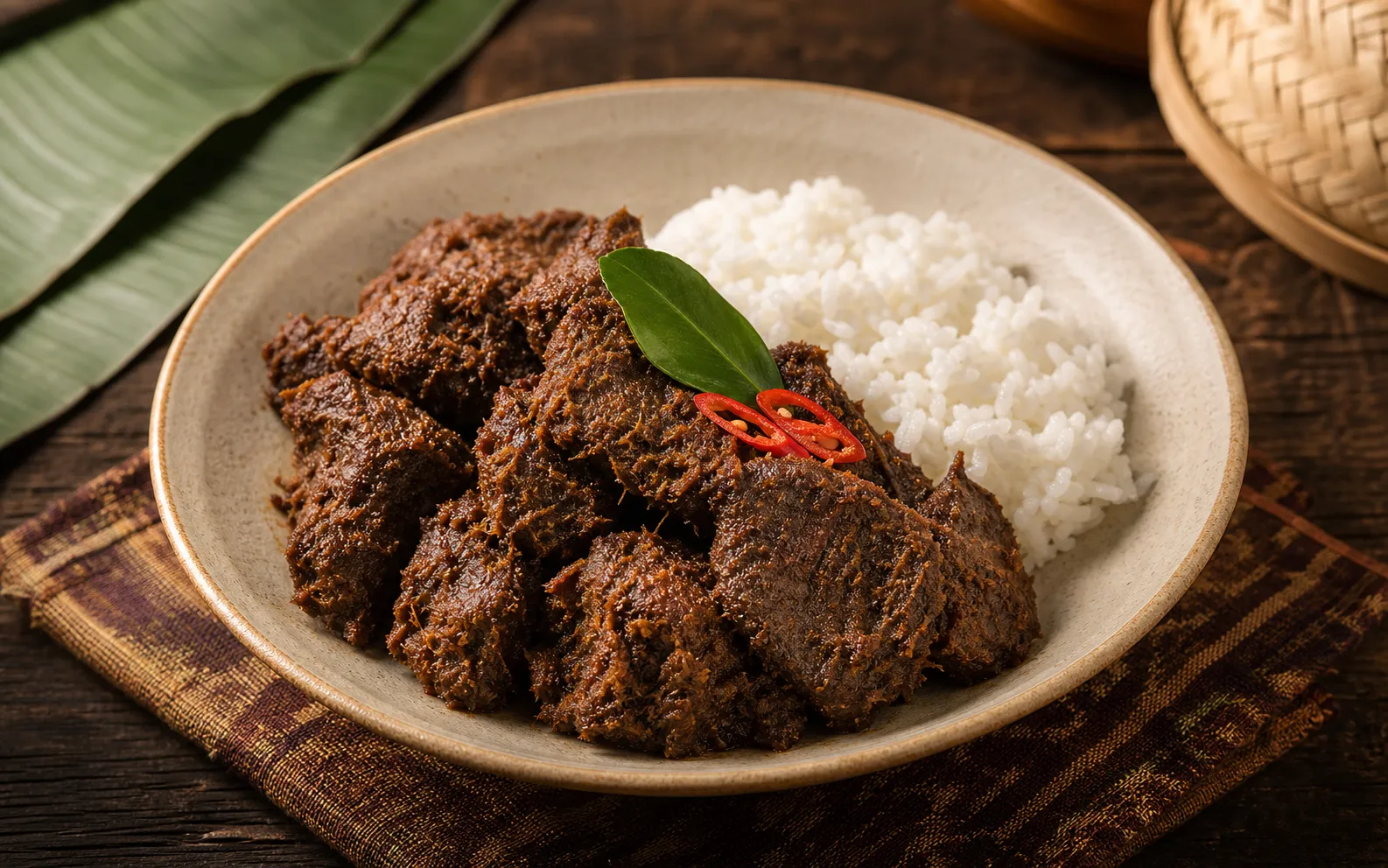
Photo by Cumibunting on Unsplash
Rendang is not a curry that happens to be thick. It is a drying technique. Minangkabau cooks in West Sumatra used the long reduction to preserve beef in a tropical climate, and every stage of the process has its own name: gulai when the sauce is still loose, kalio when it turns golden and thick, rendang only once the liquid has gone and the spice paste coats the meat.
Ingredients
That last hour is where most home cooks stop too early. The pot looks done long before it is.
Why it works
Coconut milk carries two jobs at once. Its water simmers the beef until the connective tissue softens, and its fat stays behind as the frying medium once the water evaporates. The dish poaches first and fries later, in the same pot, without you changing anything.
The kerisik matters just as much. Toasted grated coconut, ground until it releases its oil, gives rendang the dark colour and the faint smokiness that no amount of extra chili can replace.
Serving
Serve with plain steamed rice, boiled cassava leaves, and a spoonful of sambal ijo. Rendang keeps for several days at room temperature and improves overnight, which was the original point of cooking it this way.
How to make it
- 1
Blend the chilies, shallots, garlic, galangal, ginger, and turmeric into a smooth paste. Add a splash of coconut milk if the blender stalls.
- 2
Pour the coconut milk into a wide, heavy pot. Stir in the spice paste, lemongrass, kaffir lime leaves, turmeric leaves, and asam kandis.
- 3
Bring the pot to a gentle simmer over medium heat, stirring often so the coconut milk never splits or catches on the base.
- 4
Add the beef once the liquid smells fragrant and has thinned slightly. Simmer uncovered on low heat for about 2 hours, stirring every 15 minutes.
- 5
Stir in the kerisik, salt, and palm sugar when the sauce thickens to the texture of loose porridge. This stage is called kalio, and you can stop here for a wetter curry.
- 6
Keep cooking for another 1 to 2 hours. The oil separates, the sauce darkens to deep brown, and the paste eventually clings to each cube of beef.
- 7
Cook until the pot is almost dry and the beef takes on a lacquered finish. Rest for 30 minutes before serving with hot white rice.
Serving notes
Serve with a torn heel of good bread, a green salad sharp with lemon, and a glass of something cold. Leftovers reheat beautifully with a splash of pasta water.