Nasi Kapau and Nasi Padang belong to the same broad Minangkabau culinary landscape, so their rice, gulai, sambal, and richly seasoned side dishes naturally feel related. But treating the names as interchangeable hides the place and people that give Nasi Kapau its identity.
It begins in Nagari Kapau
Nasi Kapau takes its name from Nagari Kapau near Bukittinggi in West Sumatra. The name is not simply another label for food from Padang; it points to a particular community and its way of preparing, presenting, and selling a meal.
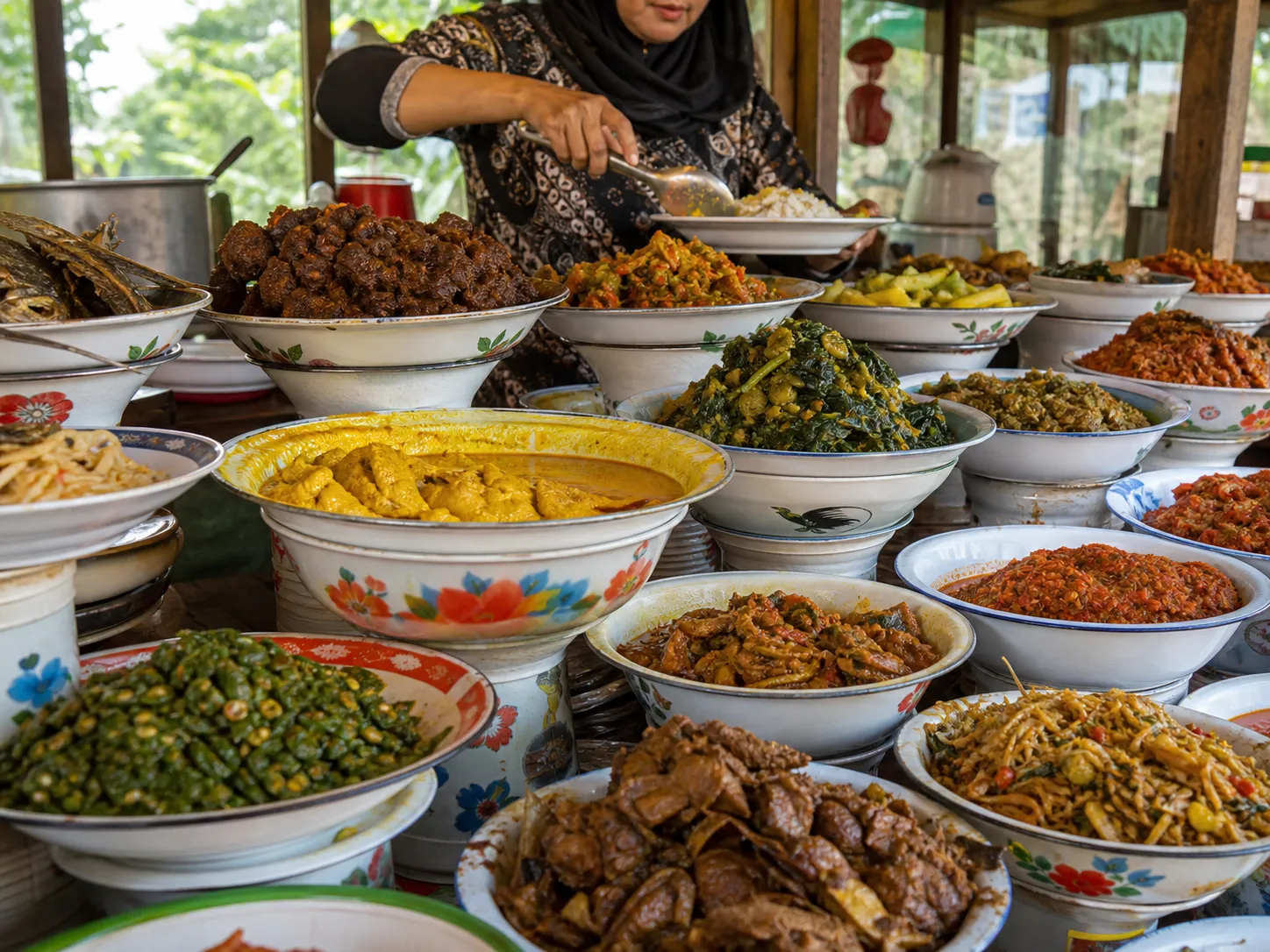
The tradition became closely associated with lapau, or food stalls, especially around Bukittinggi. A Kapau stall turns the selection of lunch into a visible conversation between the customer, the vendor, and an abundant display of dishes.
The difference is in the service
In a familiar Nasi Padang restaurant, dishes may be brought to the table in the hidang system, or customers may choose from a display. At a traditional Nasi Kapau stall, the vendor usually stands behind a raised arrangement of pots and trays while the customer orders from the other side.
The long-handled serving spoon is part of this architecture. It lets the vendor reach across the deep display, lifting a chosen curry or vegetable dish and layering it onto rice. The movement is practical, but it has also become one of the most recognisable images of Nasi Kapau.
Kapau identity lives in the dishes
The selection often includes dishes strongly associated with Kapau cooking. Gulai tambusu—cow intestine filled with a seasoned egg mixture—is one well-known example. Gulai Kapau brings together young jackfruit and vegetables in a coconut-rich sauce, while other meats, sambals, and curries complete the display.
Not every stall serves exactly the same menu, and Minangkabau cooking has always travelled and adapted. The distinction comes from the combination of origin, specialties, arrangement, and service rather than from a single ingredient.
Why the name matters
Calling every West Sumatran rice meal “Nasi Padang” makes a diverse food culture easier to describe, but less precise. Nasi Kapau reminds us that regional cuisine contains smaller local identities, each carried by communities with their own knowledge and habits.
The point is not to place one meal above the other. It is to taste more carefully. Nasi Padang and Nasi Kapau are relatives, not duplicates—and knowing the difference makes the story on the plate richer.