Rendang asks the cook to stay with the pot. What begins as beef surrounded by coconut milk, chilies, aromatics, and leaves gradually becomes something darker, drier, and more concentrated. The hours are not empty waiting; each one changes the character of the dish.
Eight hours is not just a timer
The title describes a way of cooking more than a fixed deadline. A family-sized pot may finish sooner, while a large ceremonial batch can take much longer. The vessel, heat, quantity, and water in the coconut milk all affect the pace. What matters is allowing every stage to finish instead of rushing toward a dark colour.
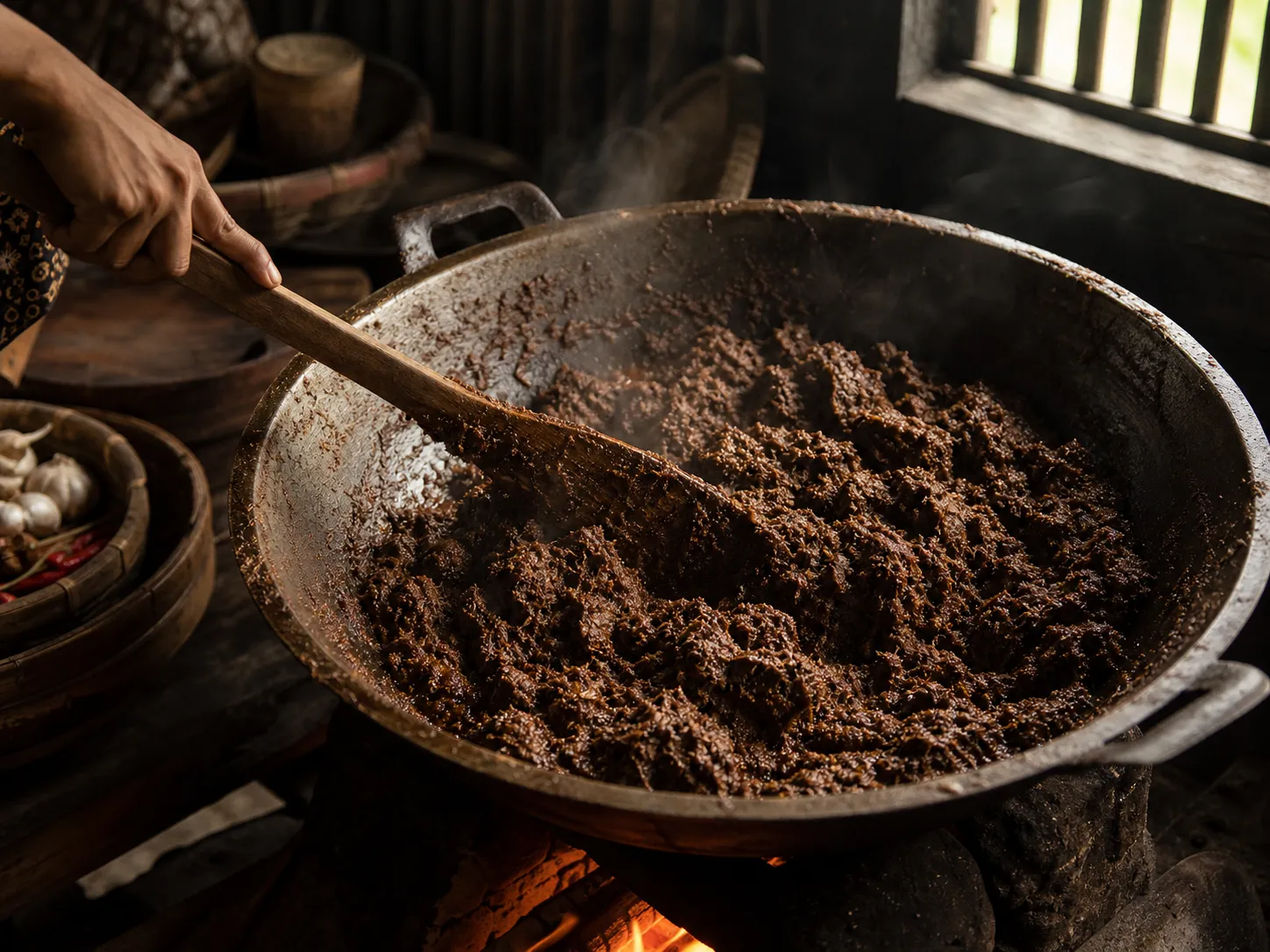
During most of the process, the cook stirs, watches the heat, and reads the texture. As the liquid disappears, the risk of scorching increases and the interval between each stir becomes shorter. Patience becomes a practical technique.
From gulai to kalio to rendang
The dish moves through recognisable stages. It begins loose and soupy like gulai. As water evaporates, the sauce thickens and turns golden into kalio. Only after the liquid has reduced further, the oil separates, and the spice paste clings closely to the beef does it become rendang.
Stopping at kalio is not a failure—it is a delicious dish in its own right. But calling it rendang skips the final transformation that gives the finished dish its deep flavour and comparatively dry texture.
What the long cooking changes
Slow cooking gives the beef time to soften while the spices lose their raw edge. Later, when much of the water has gone, coconut fat becomes the cooking medium. The contents of the pot shift from simmering toward gentle frying, concentrating the seasoning around every piece.
This is also why simply adding dark seasoning cannot reproduce mature rendang. Its colour and aroma are built gradually through reduction, toasted coconut, and careful contact with heat.
How to know it is finished
Look beyond the clock. Finished rendang has little free liquid, a dark and textured coating, and oil visible around the spice paste. The beef should be tender without collapsing, and the aroma should feel toasted rather than raw or burnt.
Let the rendang rest before serving. The coating settles, the flavours become more integrated, and the cook finally gets to step away from the pot. Eight hours later, the time is part of what the dish remembers.