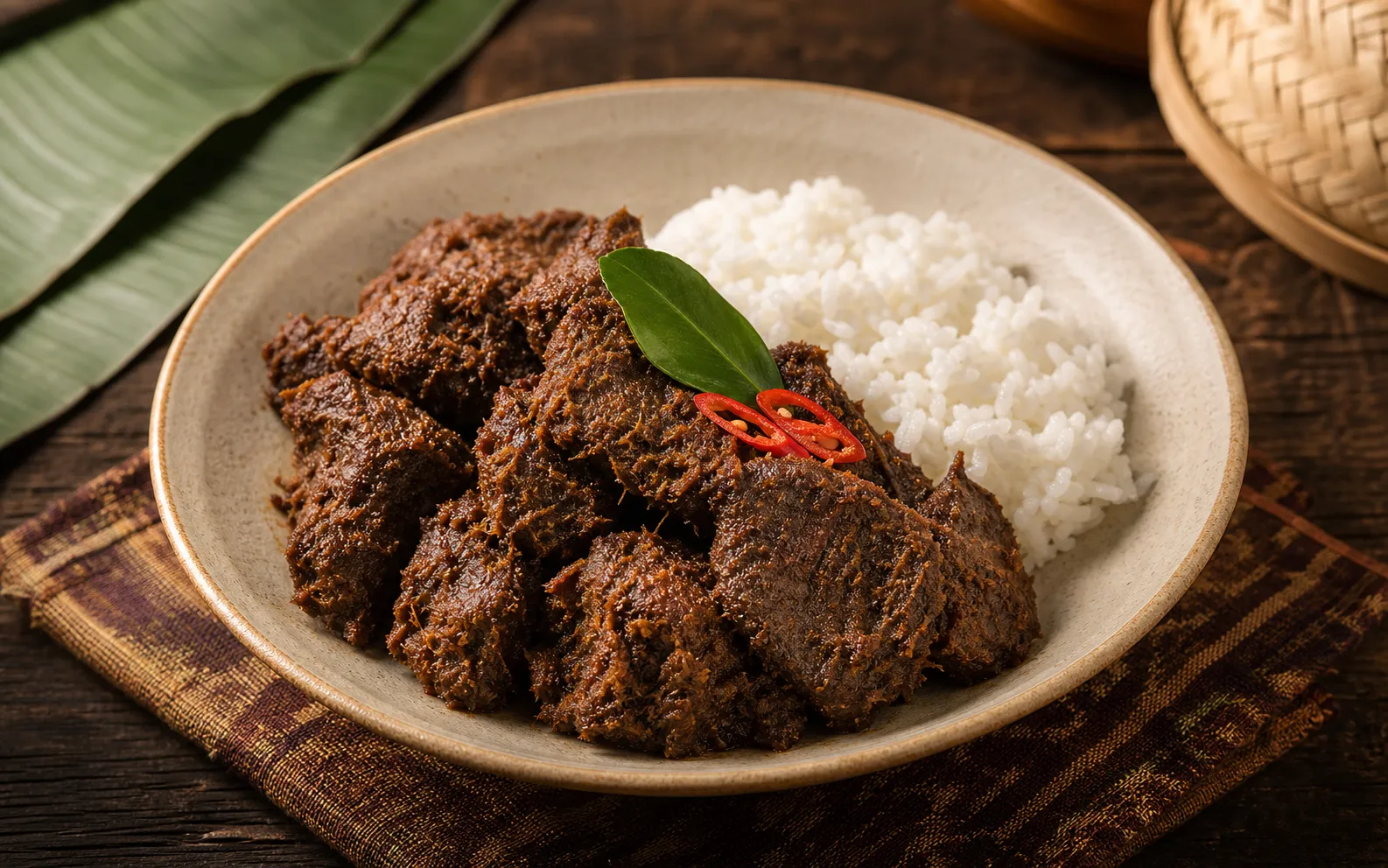
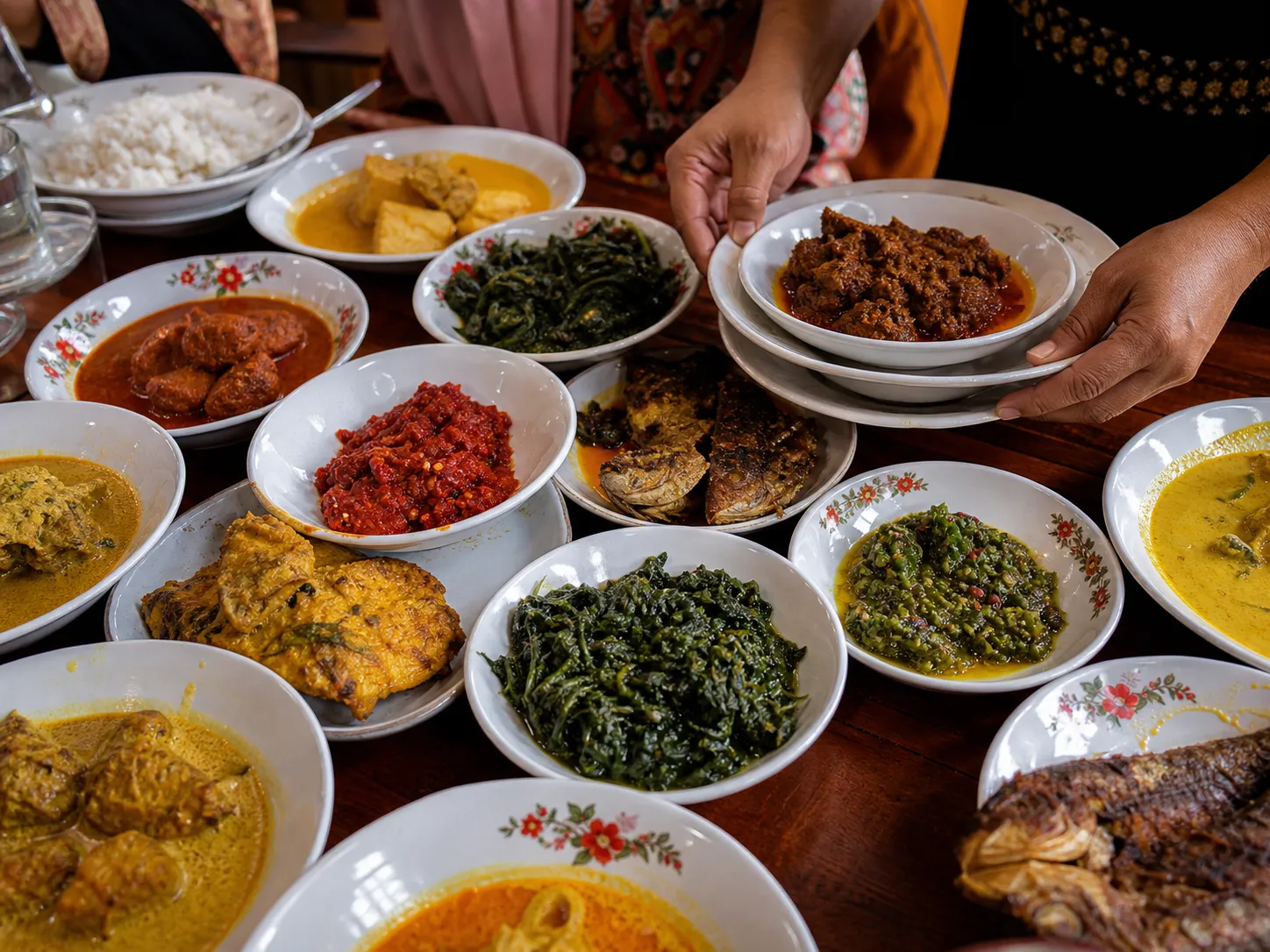
Sit down in a Padang restaurant that still practices hidang and the menu arrives before you ask for it. Small plates begin to cover the table: rendang, gulai, fried chicken, fish, vegetables, sambal, and other dishes arranged close enough for everyone to see and share.
A table without a menu
Hidang means that an assortment of prepared dishes is brought directly to seated diners. Instead of choosing one item from a printed list, guests encounter the range of the kitchen all at once and decide what to eat from the plates in front of them.
The alternative is often called pesan, or ordering. In that system, diners choose dishes from a counter or display and receive them with rice on a single plate. Both belong to the experience of a Padang restaurant, but hidang turns the whole table into the point of selection.
How the hidang system works
Servers place individual dishes across the table, often building a compact arrangement that leaves rice and dining space within reach. Diners take from the plates they want, and the bill is calculated according to the restaurant’s practice and the dishes consumed.
Because customs can vary between restaurants, guests can ask the staff how portions are counted. The essential idea remains simple: abundance is presented first, while the diner’s appetite determines the meal.
The choreography of the server
Hidang is inseparable from the skill of Padang restaurant servers. Plates may be carried in tall stacks along the forearm, balanced and distributed with a speed that makes a large order feel almost instantaneous.
That performance is not decoration added to the meal. It is an efficient response to a cuisine made from many dishes prepared in advance, ready to move from kitchen to table. The server becomes the link between the visible abundance of the restaurant and the shared space of the diners.
Choice, hospitality, and trust
The full table communicates generosity: guests should be able to see the kitchen’s range and find something that suits them. At the same time, the system depends on clear habits between restaurant and diner—what is taken, what is counted, and how plates are handled.
Modern restaurants may adapt hidang to contemporary service and food-safety practices, while others use pesan more often. Even when the format changes, the image of many small plates arriving together remains one of the most recognisable expressions of Nasi Padang hospitality.