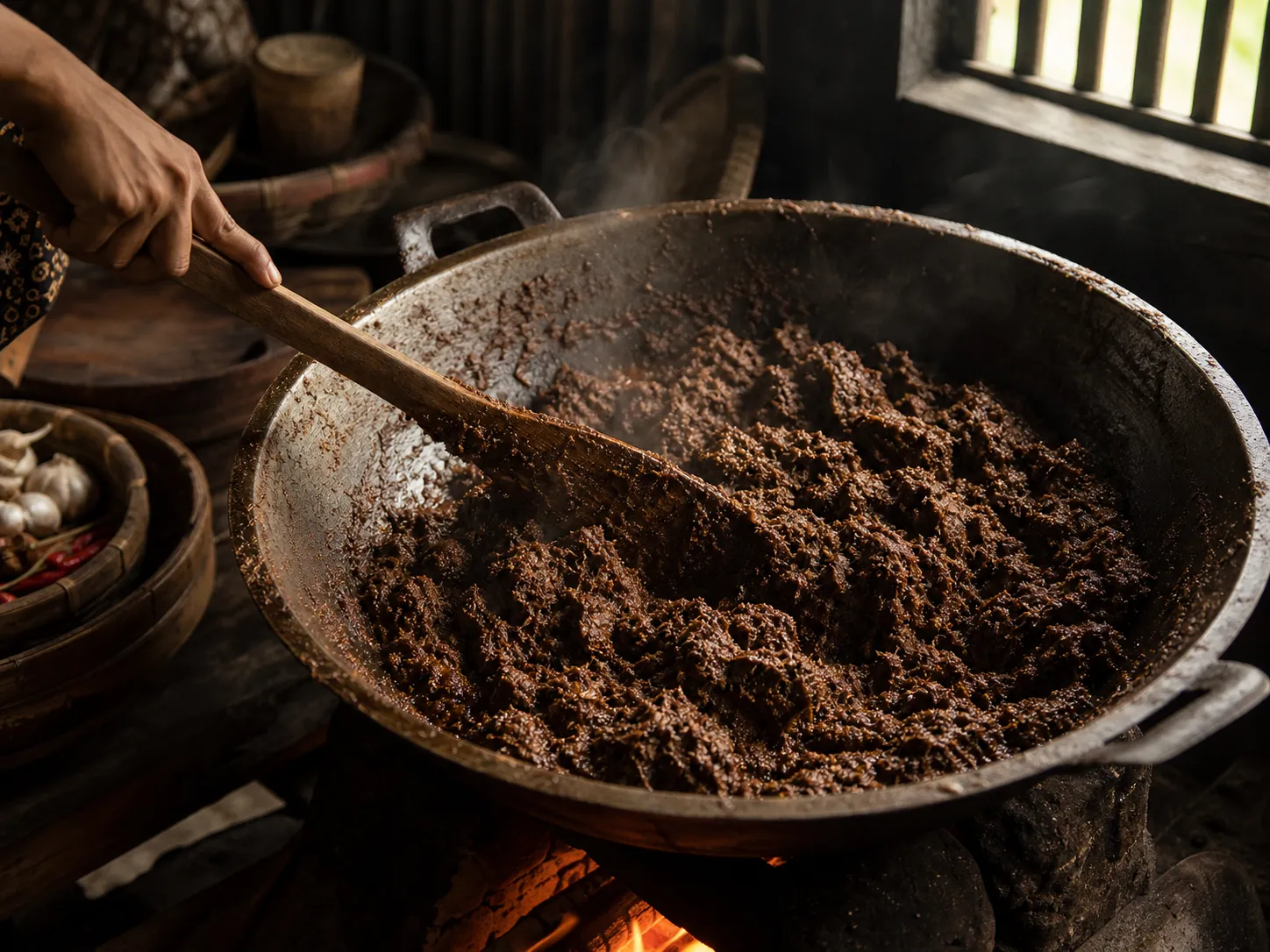
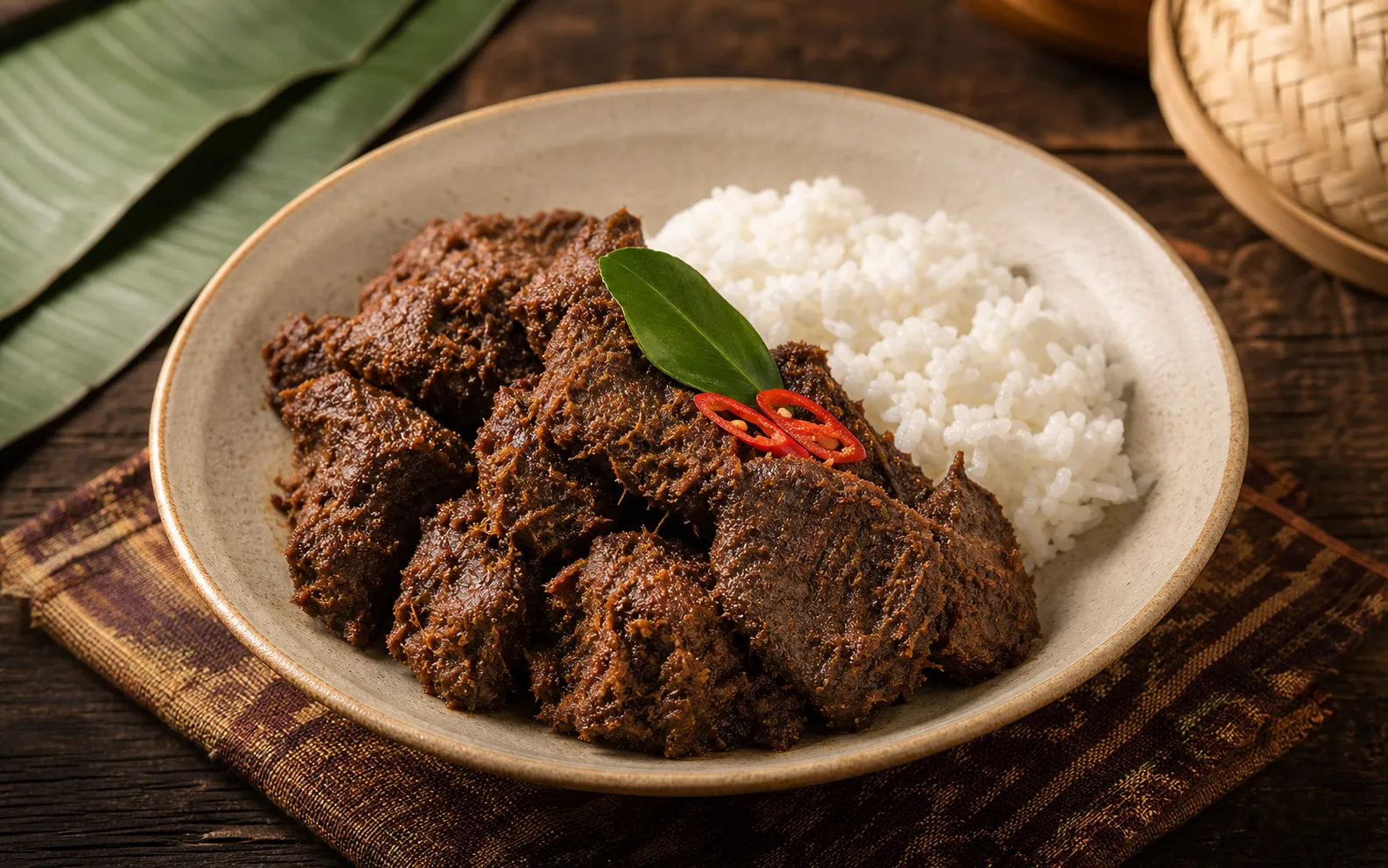
Rendang is not a curry that happens to be thick. It is a drying technique. Minangkabau cooks in West Sumatra used the long reduction to preserve beef in a tropical climate, and every stage of the process has its own name: gulai when the sauce is still loose, kalio when it turns golden and thick, rendang only once the liquid has gone and the spice paste coats the meat.
That last hour is where most home cooks stop too early. The pot looks done long before it is.
Why it works
Coconut milk carries two jobs at once. Its water simmers the beef until the connective tissue softens, and its fat stays behind as the frying medium once the water evaporates. The dish poaches first and fries later, in the same pot, without you changing anything.
The kerisik matters just as much. Toasted grated coconut, ground until it releases its oil, gives rendang the dark colour and the faint smokiness that no amount of extra chili can replace.
Serving
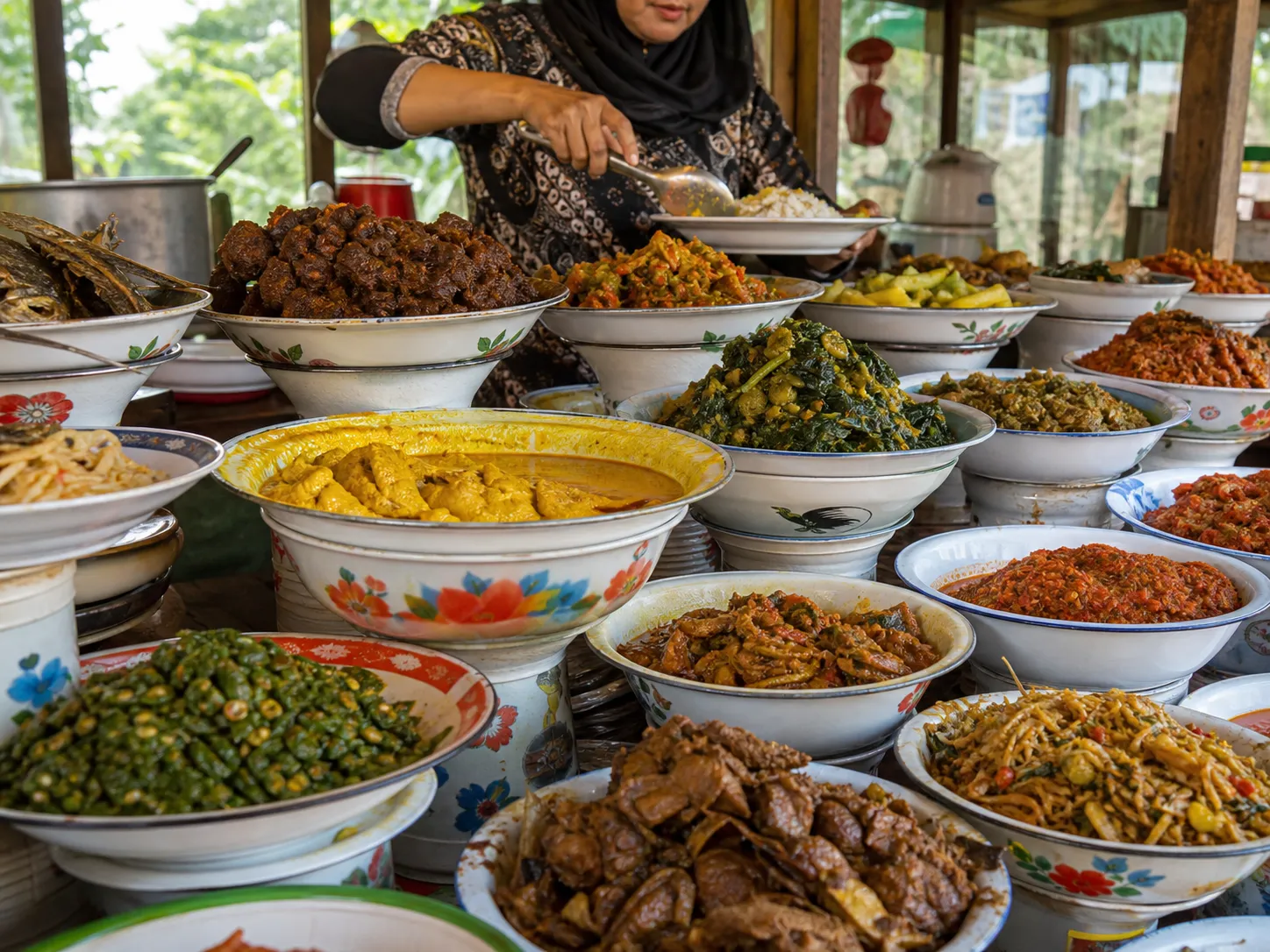
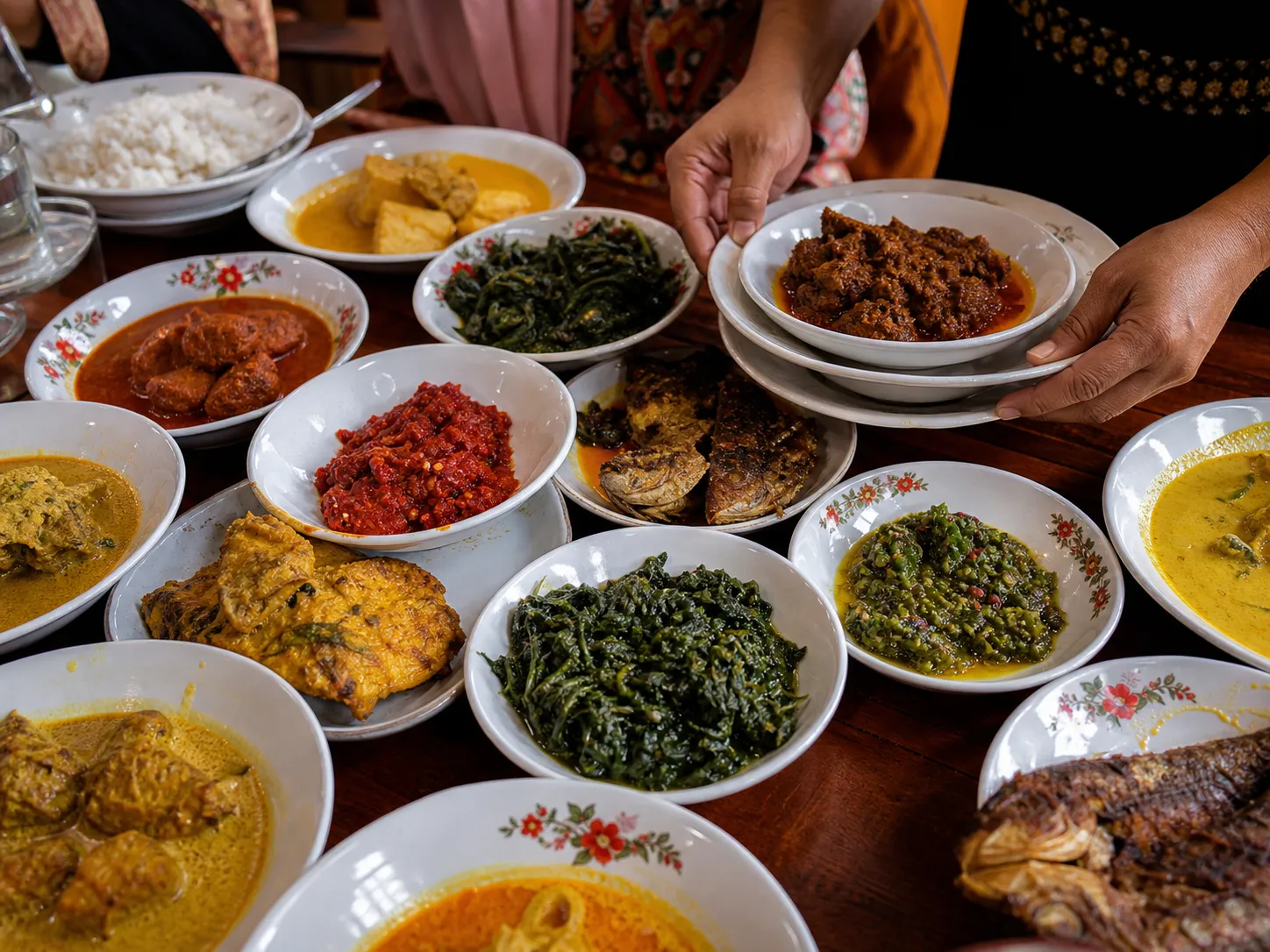
Serve with plain steamed rice, boiled cassava leaves, and a spoonful of sambal ijo.